Website accessibility

What it involves and when it really applies
What is website accessibility?
You have probably heard the term “website accessibility” quite a lot in recent years, in all sorts of contexts. In this article I will put the topic in order and cover the points that matter most.
Some background
The internet is an inseparable part of our lives and helps each of us almost every day, in countless areas.
Websites may be available to most of us, but that is not the case for people with disabilities, who can find it hard to browse and consume web content for a variety of reasons.
The idea is to make websites accessible in the same way we make restaurants, cinemas, government offices and residential buildings accessible to people with disabilities and wheelchair users.
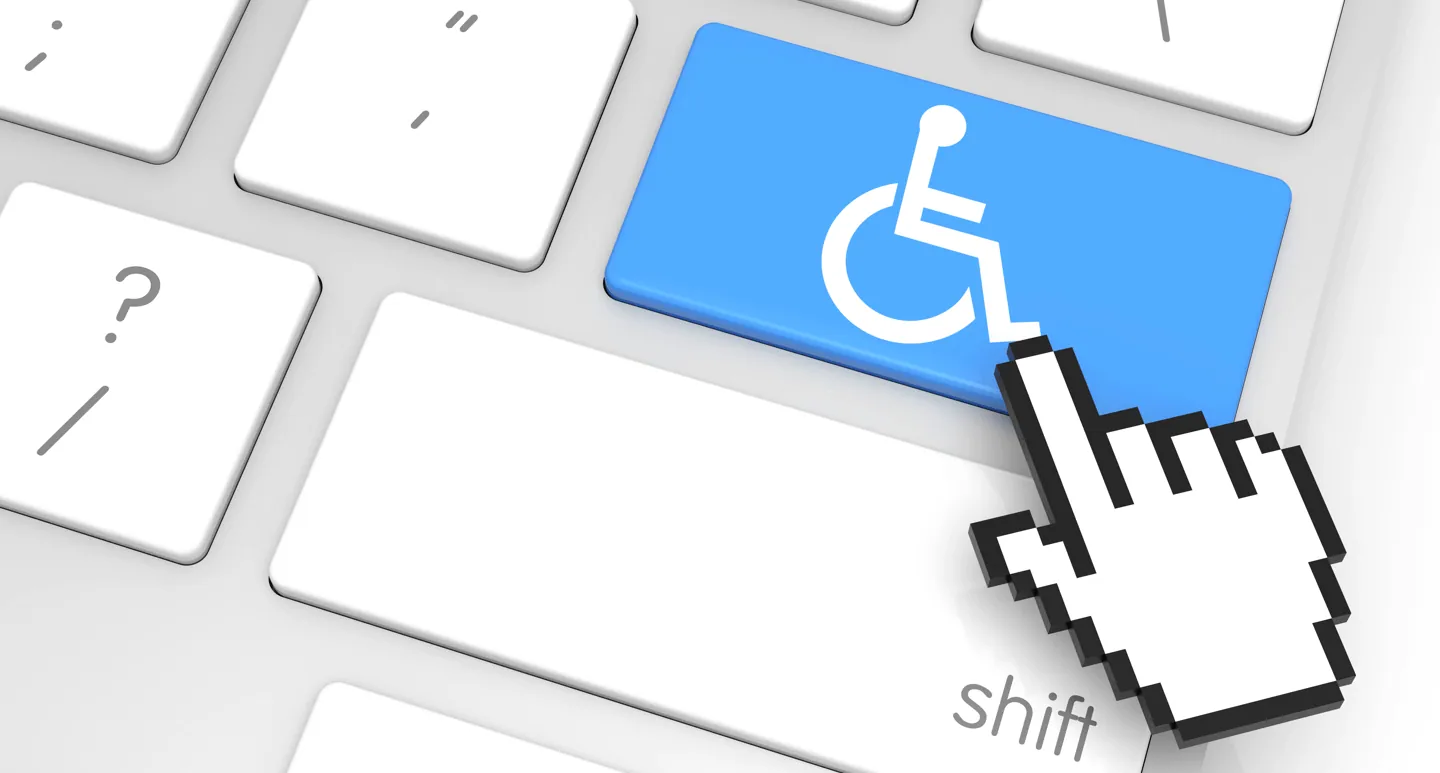
Who benefits from accessible websites?
- Users with cognitive disabilities, such as reading or comprehension difficulties
- Users with visual impairments, such as color blindness, low vision and more.
- Users with physical disabilities that make it hard to fully operate a keyboard or mouse.
- Other difficulties, such as trouble reading, difficulty understanding the language and more.
Keep in mind that this audience makes up about 25% of internet users in Israel!
- Users with cognitive disabilities, such as reading or comprehension difficulties
- Users with visual impairments, such as color blindness, low vision and more.
- Users with physical disabilities that make it hard to fully operate a keyboard or mouse.
- Other difficulties, such as trouble reading, difficulty understanding the language and more.
Israel’s website accessibility law is in fact the Service Accessibility Regulations, part of the Equal Rights for Persons with Disabilities Law passed in 1998.
Luckily for site owners, enforcement was postponed by a year to October 2017, and by that date site owners are required to make their websites accessible.
What is an accessible website?
An accessible website is one that people with disabilities can browse freely and whose content they can consume.
This article cannot cover every requirement and step needed to make a website fully accessible. It is a long, complex process with dozens of steps and development tasks, but here are a few tips:
Accessibility plugin: if your site runs on WordPress, you can use accessibility plugins that improve navigation and let users enlarge or shrink text, change contrast, stop flashing content and more.
To sum up:
Enforcement of the website accessibility law was postponed to October 2017. At this point it is still unclear what will happen with the law and exactly how it will be enforced.
My recommendation is to study accessibility properly through the Access Israel website and get as clear an understanding as you can of the guidelines and rules.
Until the exact requirements and the types of websites covered by the law become clear, the best approach is to wait patiently for the picture to settle.
The author:
Yossi Levi, internet marketing lecturer and head of the digital program at Ruppin Academic Center.
CEO and owner of the media company Comi To Go, SEO and online marketing